Study computer science and information systems in Bamberg
The Faculty of Information Systems and Applied Computer Sciences (WIAI) at the University of Bamberg offers five bachelor’s and six master’s programmes. Find out which one fits you, in which language it is taught and how to apply.
Language: please read this first
One master’s programme is taught entirely in English. In all other programmes the main language of instruction is German. Unless your qualification was obtained in German, you need to prove German at level B2 (upper intermediate). If you do not have B2 yet, there are ways to get there: see programmes taught in German.
Why study at the WIAI in Bamberg
Close contact
You study at a smaller university. According to the faculty, all members of the university are open to the personal concerns of students.
Professors and subject combinations
More than 30 professors teach at the faculty. According to the faculty, (applied) computer science can be combined with other subjects such as psychology or sociology.
Study abroad
The university has exchange places at more than 350 partner universities in more than 60 countries. The faculty says that almost a third of Bamberg students spend part of their studies abroad.
Contacts to companies
Every summer, the faculty’s career day brings students together with about 20 companies, from Bamberg IT firms to international IT corporations.
A modern place to study
The faculty’s main building is in a quiet location right next to the ERBA park. It has a coworking space.
Living costs and safety
The university’s Welcome Center suggests budgeting €900 to €1,000 per month for living costs. Bavaria has the lowest recorded crime rate of Germany’s 16 federal states.
More about the faculty, the town and the people: what studying in Bamberg is like.
25 years of the faculty
The faculty celebrated its 25th anniversary in June 2026 on the ERBA campus.
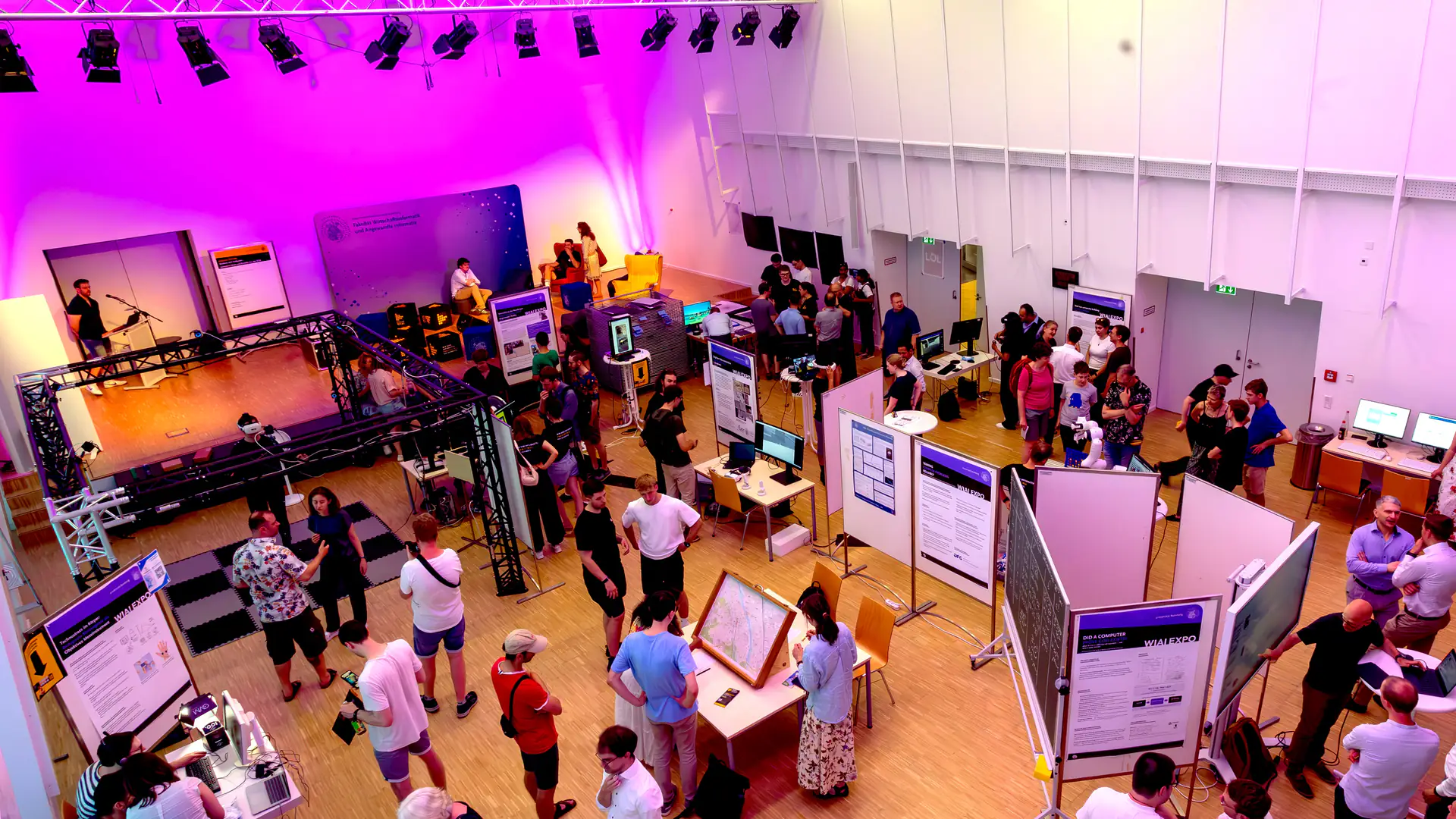
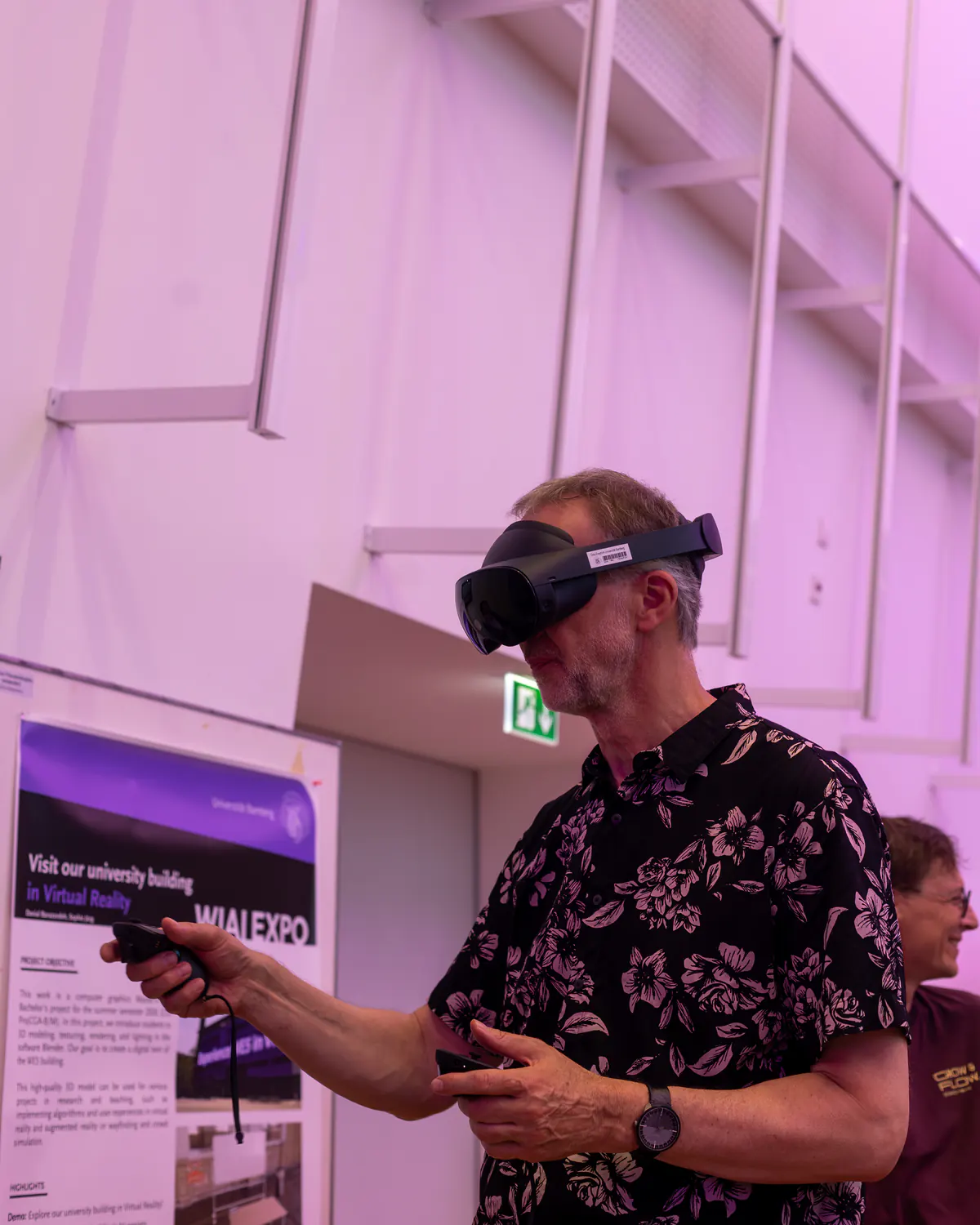
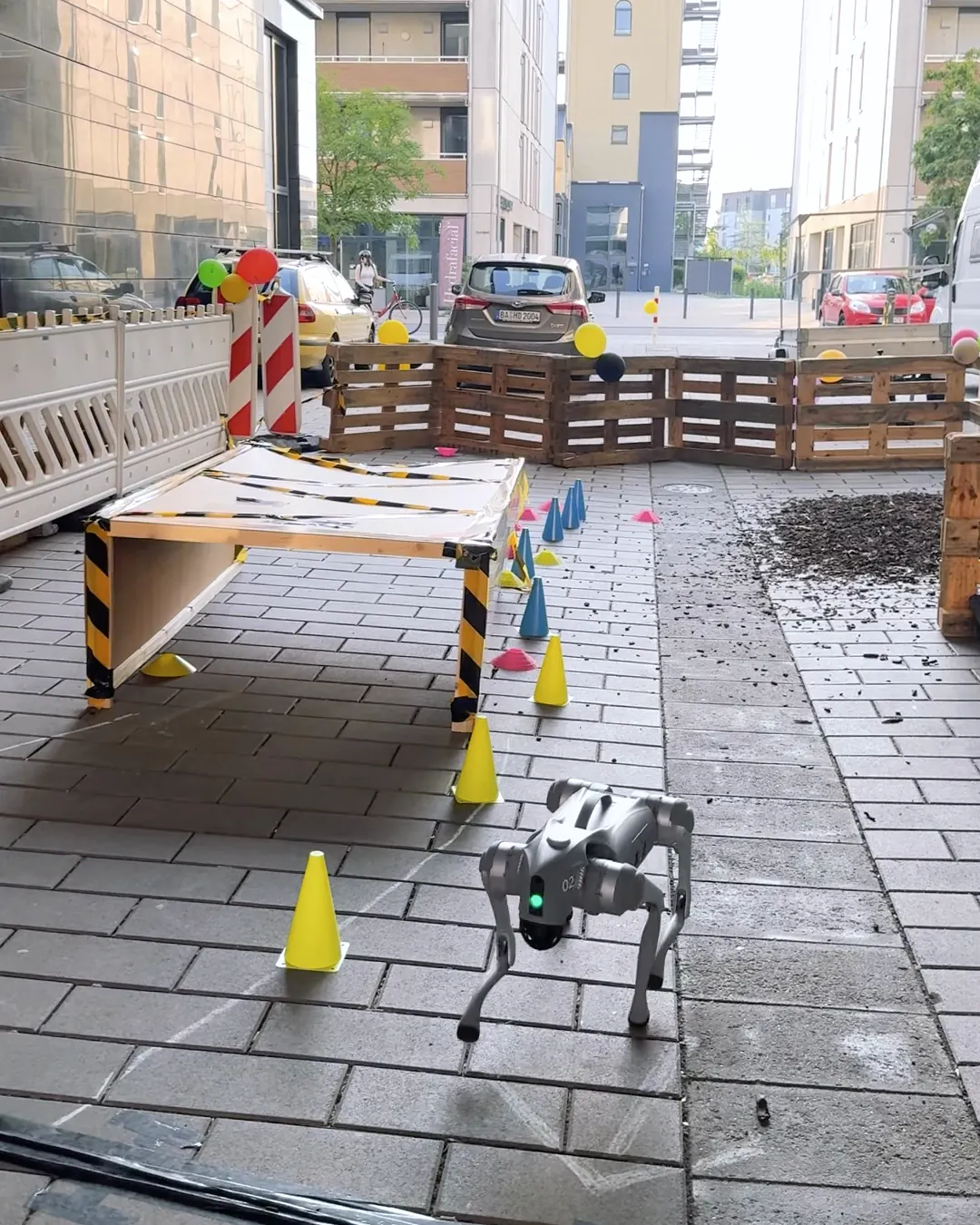
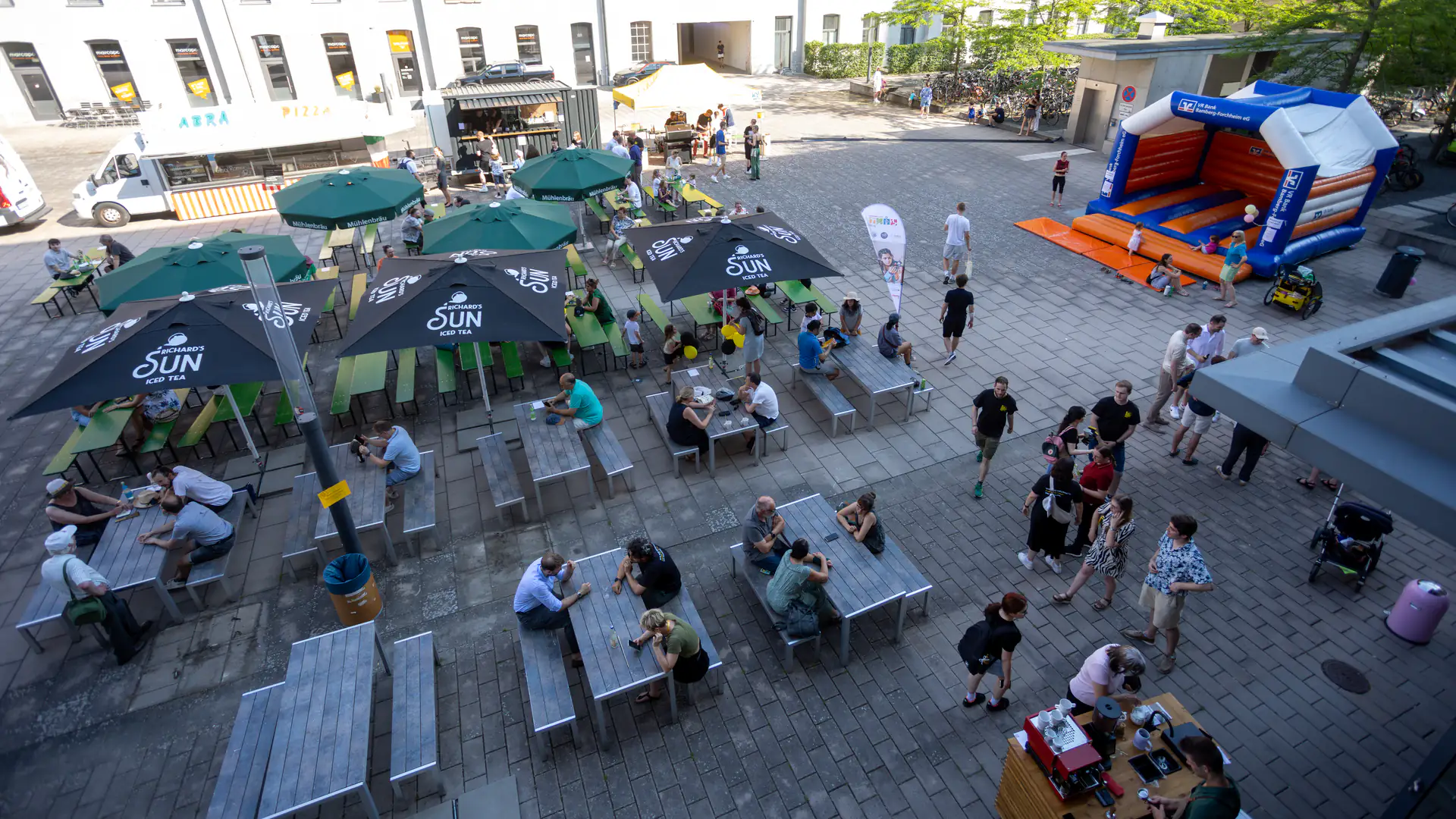
How the faculty has grown since 2001: the faculty.
The English-taught master: International Software Systems Science
The faculty’s only master’s programme taught entirely in English. You learn to plan, develop, analyse and validate complex software systems. You choose your own modules, and you can spend a semester abroad.
Where it leads: software development and consulting, software architecture, IT infrastructure, industrial research and development, or research work towards a doctorate (PhD).
- Degree
- at least 180 ECTS credits (the European unit for study workload): in the same field with a grade of 2.7 or better, or in a related computer science programme with 2.0 or better and at least 115 ECTS credits of matching content
- English
- IELTS 6.5 or TOEFL iBT 90, or an equivalent certificate. With a degree from outside the Lisbon Recognition Convention states and a grade worse than 1.5, you also need the GRE or GATE test.
- Deadlines
- 15 January for the summer semester, 15 July for the winter semester
Programmes taught in German
In these programmes the main language of instruction is German. Unless your qualification was obtained in German, you need to prove German at level B2. Each programme has its own page in German.
English matters too: some modules are taught in English, and English-language reading plays an important role in almost all programmes.
Bachelor’s degrees (B.Sc.)
There is no English-taught bachelor’s programme.
Computer Science Informatik
You learn to design and build complex, distributed and reliable systems. Specialise in software development, system architecture or theoretical computer science. Graduates work, for example, on large software projects, in consulting, as software architects or in IT infrastructure.
Applied Computer Science Angewandte Informatik
A solid computer science education with specialisations such as media, computer graphics and design, interaction and visualisation, or machine learning. Graduates can work in all phases of system and software development.
AI & Data Science KI & Data Science
AI as a part of computer science, combined with statistics, mathematics and applications in the social sciences and humanities. You choose between three specialisations: Data Science, General AI and Information Systems. Graduates work in research and in companies.
International Information Systems Management despite the name, taught mainly in German
An international, management-oriented education for running IT and information systems in an international context, with semesters or internships abroad. Graduates work, for example, in IT companies, IT application consulting, sales, banks and insurance companies.
Information Systems Wirtschaftsinformatik
You learn to design and manage information systems with modern information technology. Graduates work, for example, in industry and trade, software companies, banks and insurance companies, public services, education and research, and consulting.
Your way to German B2 and to a place at university
Accepted proofs of German are, for example, DSH-1, TestDaF with 3 in all parts, Goethe-Zertifikat B2, telc Deutsch B2, ÖSD Zertifikat B2 or DSD II.
- Your school certificate gives direct access, but your German is not yet B2: with at least B1, you can apply for the university’s German course for study preparation (up to two semesters, with a fee). During the course you cannot study your degree programme yet. Afterwards, you apply again for it.
- Your school certificate does not give direct access: the route is the Studienkolleg in Munich (a preparatory course that ends with an assessment examination, usually after two semesters). You apply through a Bavarian university such as Bamberg. You need German at B2 and must pass an entrance test.
Deadlines, assessment of your certificate, fees
The International Office decides which route applies to you when it assesses your school certificate as part of your application. There are no checks in advance. For a first orientation, see the DAAD and anabin databases.
Deadlines without EU/EEA citizenship (EU = European Union, EEA = European Economic Area): your complete application must reach the portal by 15 January (summer semester) or 15 July (winter semester). The next deadline is 15 January 2027.
EU/EEA citizens can apply until the end of the enrolment period (summer semester 2027: 25 March 2027). Apply early, because you enrol by post after admission.
For the German course for study preparation and the Studienkolleg, the deadlines of 15 January and 15 July apply to everyone, including EU/EEA citizens.
With a certificate from China, India or Vietnam you also need an APS certificate (issued by the Akademische Prüfstelle). Applicants without EU/EEA citizenship pay an application fee of €60.
The International Office handles bachelor’s applications from abroad. For first questions, use its contact form.
International Office: bachelor’s applicants
Master’s degrees (M.Sc.)
Examples of accepted proofs of German at B2 are DSH-1, TestDaF with 3 in all parts, Goethe-Zertifikat B2 or telc Deutsch B2.
Applied Computer Science Angewandte Informatik
Specialisations include Ambient Intelligent Interaction, Data Science, Cultural Computing, Artificial Intelligence, Media Informatics and Human-Computer Interaction. If you prefer practical work, you can do two projects on current research topics besides your thesis.
Computing in the Humanities
For graduates in the humanities or human sciences. You add computer science to your knowledge and learn to help design software systems in interdisciplinary projects. Focus areas: Cognitive Systems, Cultural Computing, Media Informatics, Human-Computer Interaction.
Interaction Research and Design
You learn about user experience design, user interface design, usability standards, qualitative analysis methods, psychology, sociology and software development. The programme aims to prepare you to link practice and theory.
International Information Systems Management despite the name, taught mainly in German
You learn to manage information systems within and between organisations, plus project management, foreign languages and intercultural management skills. An internship abroad gives you international experience.
Information Systems Wirtschaftsinformatik
Information systems in business and administration. You can choose a focus: Digital Analytics and Artificial Intelligence, Digital Health, Digital Transformation, Energy and Sustainability, or Systems Engineering. Example jobs: IT consultant, IT project manager, IT system architect.
How to apply and which deadline applies
You apply online through the Registrar’s Office (the university office for applications and enrolment). The examination board (the faculty committee that decides on admission, exams and recognition) decides on your admission.
The application deadline of each programme applies to international applicants as well. If you need a visa, the Registrar’s Office recommends applying by about 15 January (summer semester) or 15 July (winter semester), because the visa takes time.
The Registrar’s Office explains the procedure in English: master’s applicants.
Your career
While you study
Support from the faculty
A Career Service of the faculty’s own
The faculty’s Career Service supports your career planning and your start into working life.
A career day at the faculty
Every summer, students meet about 20 companies at the faculty, from Bamberg IT firms to international IT corporations. Its supporting programme, such as application training, was held in German in 2026. The next career day is on 16 June 2027.
Internships abroad
Through the Corporate Internship Program you can do an internship with a partner company abroad, for example Tata Consultancy Services in India or Intelligent Banker in Denmark.
After you graduate
Time to find a job in Germany
Up to 18 months
If you are not an EU citizen: after you graduate from a German university, you can get a residence permit for up to 18 months to look for a job, if you can show that you can support yourself during this time. You may work during this period.
Studying in Bamberg
Bamberg has about 80,000 inhabitants: big enough for variety, small enough to find your way quickly. Its old town has been a UNESCO World Heritage Site since 1993. Many university buildings are in the town centre, so you can get to many places on foot or by bike.
Questions?
Write to us in English. We pass your question on to the person responsible for your programme.